

T-Shirt GSM Guide: Which Fabric Weight to Choose for Custom T-Shirts

Two plain white t-shirts can look identical online and feel completely different in the hand. The number that explains most of that difference is GSM. A 180 GSM fabric weighs 180 grams per square metre, while a 240 GSM heavyweight tee uses a third more fabric for the same area. This t-shirt GSM guide explains what the number means, which weights suit events, staff uniforms and retail merchandise in the UAE heat, and how GSM affects printing, with options from our custom t-shirts and polo shirts range.
For most buyers, the right t-shirt GSM sits between 160 and 220. Choose 160 to 180 GSM for outdoor events and summer giveaways, 180 to 220 GSM for staff tees that need to last, and 220 to 240 GSM when you want a premium, structured feel for retail or brand merchandise.
What GSM means on a t-shirt
GSM stands for grams per square metre. It measures the weight of the finished fabric, not the weight of the whole shirt, and it is the standard unit for fabric weight in textiles, as the reference on textile measurement units explains.
- Higher GSM: a denser, thicker fabric that is more opaque and holds its shape.
- Lower GSM: a lighter, more breathable fabric that drapes softly but can show through in pale colours.
- Ounces: some suppliers quote ounces per square yard. One ounce per square yard is about 33.9 GSM, so 5.3 oz is about 180 GSM and 6.5 oz is about 220 GSM.
Planning a branded order?
Share your quantities, budget and deadline. We reply with options, mockups and a bulk price, plus free design help.
T-shirt GSM chart: weight classes compared
The table groups the weights you will see on supplier sheets. Ranges overlap slightly between makers, so treat them as a guide rather than a rule.
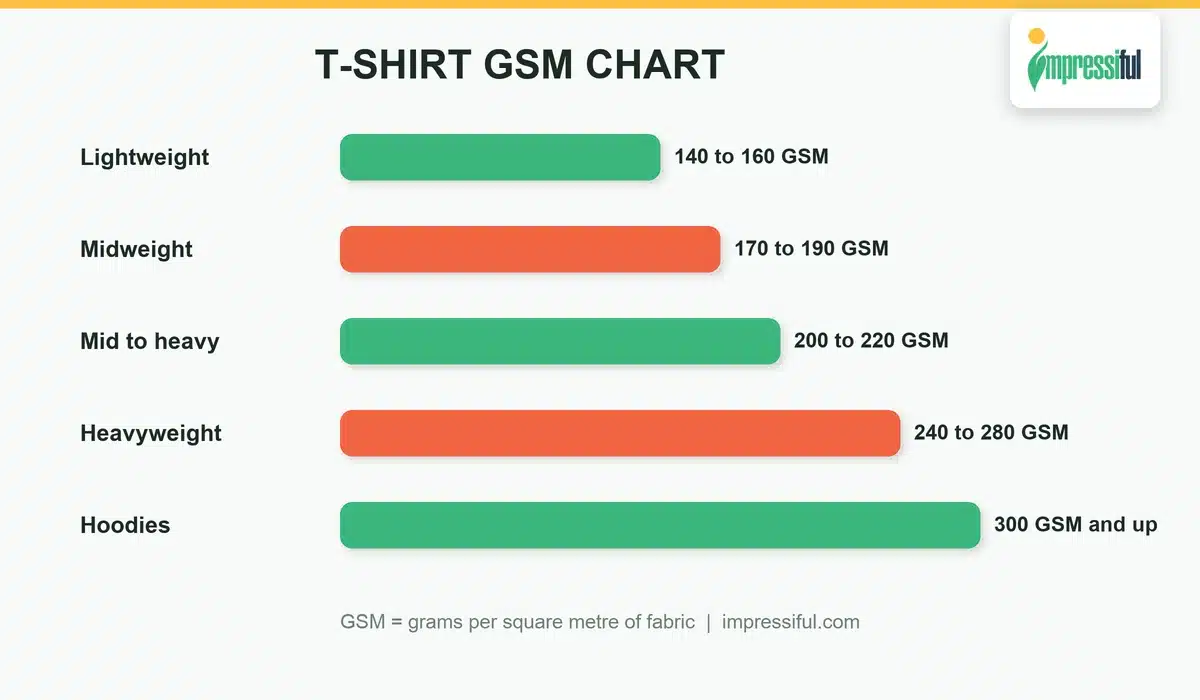
| Weight class | GSM | Feel | Best for |
|---|---|---|---|
| Lightweight | 140 to 160 | Thin, airy, soft drape | Run and sports events, beach activations, layering |
| Midweight | 170 to 190 | Balanced, breathable, the classic tee | Event and campaign tees, everyday staff wear |
| Mid to heavy | 200 to 220 | Fuller hand, less see-through | Staff uniforms worn weekly, corporate gifts, polos |
| Heavyweight | 240 to 280 | Thick, structured, premium | Oversized fits, retail merchandise, streetwear |
| Very heavy | 300 and above | Warm and dense | Hoodies and sweatshirts, not t-shirts |
Our round neck t-shirts are listed in fabric weights from 160 to 240 GSM, and our oversized t-shirts in 180, 200, 220 and 240 GSM, so you can match the weight to the job.
Which GSM suits each use in the UAE
Heat changes the answer. A heavyweight tee that feels premium in a cool climate can be uncomfortable at an outdoor event in a UAE summer, so start with where and how often the shirt will be worn.
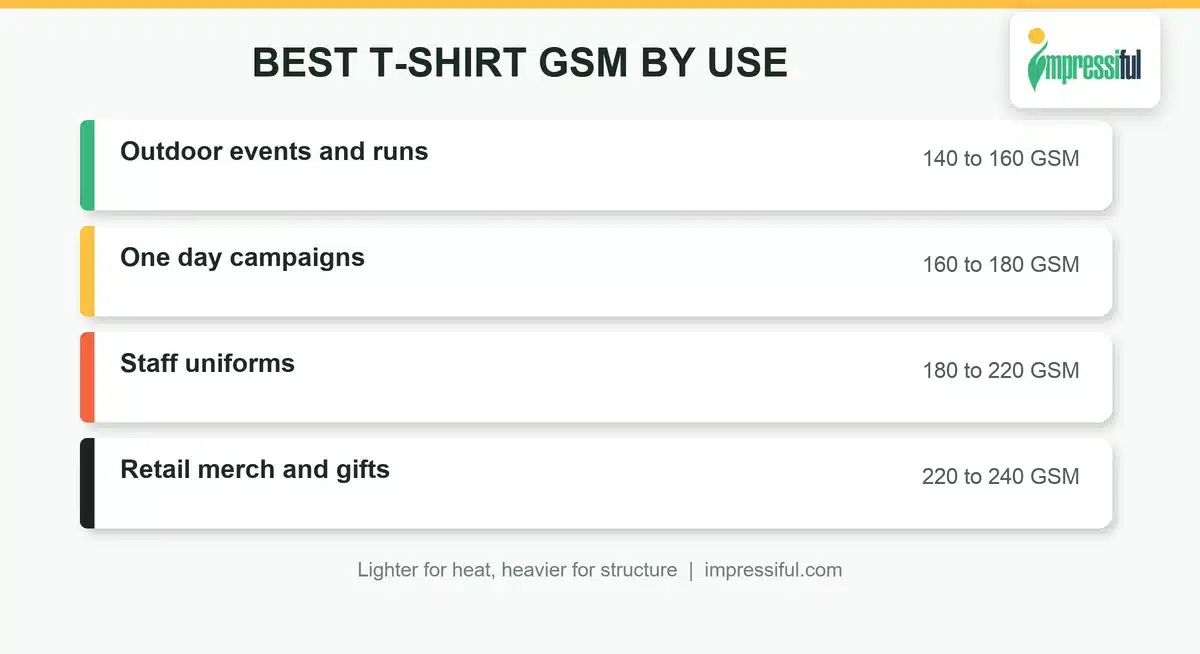
- Outdoor events, runs and beach activations: 140 to 160 GSM keeps people cool. Pick mid or dark colours if the fabric is thin.
- One day campaigns and giveaways: 160 to 180 GSM balances comfort and a clean print surface, and keeps the cost per shirt sensible for large runs.
- Staff uniforms: 180 to 220 GSM survives weekly washing and still breathes indoors. For front of house teams, compare with our custom polo shirts guide.
- Retail merchandise and gifts: 220 to 240 GSM gives the weight and structure people associate with quality, especially in oversized cuts.
Why two shirts with the same GSM feel different
GSM measures weight, not quality. A well made 180 GSM shirt can feel better than a rough 240 GSM one, because three other things shape the feel.
- Yarn: combed cotton has the short fibres removed, which gives a smoother and stronger yarn, as described in the overview of combed cotton. Ring-spun yarn feels softer than open-end yarn at the same weight.
- Knit: most t-shirts use single jersey, a light knit with one smooth face, while heavier double knits and pique are typical for polo shirts, according to the jersey fabric entry.
- Fibre: 100% cotton breathes and prints well; cotton and polyester blends shrink less and dry faster; polyester performance fabrics wick sweat for sport.
How GSM affects printing and embroidery
The fabric has to carry the decoration. These rules of thumb help you pair the weight with the logo method.
- DTF prints: work across most weights and fibres, including blends. Our guide to what DTF printing is explains how the film transfer sits on the fabric.
- Embroidery: heavier fabrics of 200 GSM and above hold stitches with less puckering, which is why embroidered logos suit polos and heavier tees. Compare the options in embroidery vs printing.
- Light fabrics and large prints: big, heavy prints on 140 to 160 GSM shirts can feel stiff and pull the fabric, so keep artwork lighter on thin tees.
How to choose the right GSM for your order
- Start with the wearer: outdoor or indoor, one day or every week, staff or customers.
- Pick a weight band: use the chart above, then decide on cotton or a blend.
- Check fit and sizes: heavier fabrics feel bigger, so confirm sizes against our size chart.
- Match the logo method: printing, DTF or embroidery, sized for the fabric.
- Approve the digital mockup: confirm the colour, GSM, placement and quantities per size before production.
Ordering for a whole team or event? Our corporate and bulk t-shirt printing page shows the styles we print for companies.
Frequently asked questions
What GSM is good for a t-shirt?
For most uses, a good t-shirt sits between 160 and 220 GSM. Around 180 GSM is the most common weight for event and staff tees because it balances comfort, durability and print quality, while 220 to 240 GSM suits premium merchandise.
Which is better, 180 GSM or 220 GSM?
Neither is better for every job. A 180 GSM shirt is cooler and lighter, which suits outdoor events and hot days, while a 220 GSM shirt feels fuller, is less see-through and lasts longer as a uniform. Our round neck t-shirts come in both weights.
Is a 240 GSM t-shirt thick?
Yes. At 240 GSM a t-shirt is in the heavyweight class, with a structured, premium feel that suits oversized fits and retail merchandise. It is warmer to wear, so in the UAE it works best indoors or in the cooler months.
Is higher GSM better for t-shirts?
Not always. A higher GSM means a thicker and usually more durable fabric, but yarn quality, the knit and the fibre matter just as much, and a heavy shirt can be too warm for outdoor wear. Fabric weight is only one measure, as the textile measurement reference shows.
Is a 200 GSM cotton t-shirt good?
Yes, 200 GSM cotton is a solid midweight that feels more substantial than a basic tee while staying breathable. It is a good choice for staff uniforms and corporate merchandise, and it holds DTF prints well. For logo options on this weight, see embroidery vs printing.
Get a free quote for custom t-shirts
Tell us how the shirts will be used, the GSM and colours you prefer and the quantities per size, and we will send a free digital mockup and a quote with price and delivery dates confirmed. Need the artwork prepared? Use request a design.
Get a free quote for custom t-shirts
Prefer WhatsApp? Message +971 52 656 8355 and tell us what you need. Our office is at Office C1-1F-SF3340, Ajman Free Zone C1 Building, Ajman, UAE, open Monday to Saturday, 9:30am to 7pm.