

rPET Bags and Recycled Fabric Merchandise Explained

rPET bags are reusable bags made from recycled PET plastic, mostly drinks bottles, that has been turned back into polyester fabric. This rPET bags guide explains what rPET is, how bottles become recycled fabric, how it compares with cotton and jute, which branded items it suits and the six checks to make before you order, with links to our eco-friendly products for each idea.
In short, rPET fabric is the same polymer as ordinary polyester, so it is strong, light and water resistant, but it is made from waste instead of new oil based plastic. It is a sound choice for totes, backpacks and pouches, as long as the recycled content is certified and you describe it honestly.
What is rPET?
PET, short for polyethylene terephthalate, is the clear plastic used for most water and soft drink bottles and carries resin code 1. When used PET is collected and processed again, it becomes rPET, recycled PET. Spun into yarn, the same material is sold as recycled polyester, so rPET fabric and recycled polyester usually mean the same thing.
Recycled polyester is still made mainly from bottles rather than old clothes, according to Textile Exchange’s Materials Market Report 2025. Turning old textiles back into new fibre is growing, but it is still a small share of the market.
Planning a branded order?
Share your quantities, budget and deadline. We reply with options, mockups and a bulk price, plus free design help.
How plastic bottles become rPET fabric
Most rPET fabric is made by mechanical recycling, which keeps the plastic as plastic and simply reshapes it.
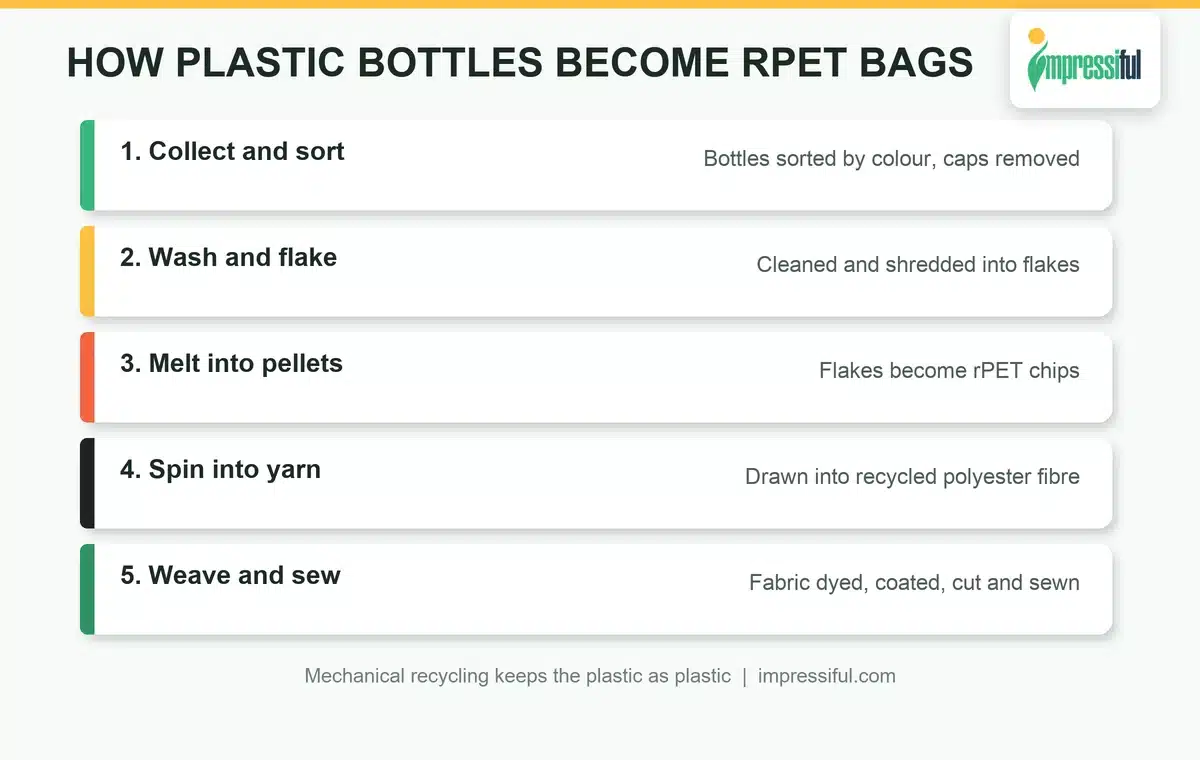
- Collect and sort: used bottles are collected, sorted by colour and stripped of caps and labels.
- Wash and flake: the bottles are cleaned and shredded into small flakes.
- Melt into pellets: the flakes are melted and formed into rPET pellets, also called chips.
- Spin into yarn: the pellets are melted again and drawn into polyester fibre, then twisted into yarn.
- Weave and sew: the yarn is woven or knitted into fabric, dyed, coated if needed and cut and sewn into bags.
Fabric weight is often given in denier, written as D. The higher the number, the thicker the yarn: 300D suits light shoppers and drawstring bags, 600D suits totes and pouches, and 1680D is a heavy, tough weave used for backpacks and tech bags.
rPET bags vs cotton, jute and canvas
Each recycled or natural fabric has a place. The table compares the materials we see most in branded bag orders.

| Material | Feel and weight | Water | Best for |
|---|---|---|---|
| rPET (recycled polyester) | Light, smooth, folds small | Water resistant; waterproof only with a coating | Foldable shoppers, backpacks, pouches, tech bags |
| Recycled cotton | Soft, slightly textured | Absorbs water | Everyday totes, cosmetic pouches |
| Jute and juco | Stiff, natural, heavier | Absorbs water, slow to dry | Shopping bags, gift bags, premium totes |
| Canvas (cotton) | Thick and durable | Absorbs water | Heavy duty totes, event bags |
For a full look at cotton, canvas and jute totes, see our custom tote bags guide. Choose rPET when the bag has to be light, quick drying or tough; choose cotton or jute when a natural look matters most.
Which rPET bags and recycled fabric merchandise to order
Recycled fabric works for far more than shopping bags. These are the items we see ordered most for staff, events and sustainability campaigns.
Foldable rPET shoppers
Light shoppers fold into a pocket, so people carry them every day instead of taking a new bag at the till. The EcoChic shopper bag is made from rPET with reinforced handles and a large print area.
Backpacks and tech bags
Heavier rPET weaves are tough enough for laptops and daily commuting. Our recycled tech bag is made from GRS certified 1680D rPET, and the branded backpacks guide includes a recycled RPET office backpack.
Pouches and organisers
Small rPET pouches suit cosmetics, stationery and travel kits, and they fit neatly into a welcome kit or event pack.
Gift sets and office items
rPET fabric is also used for notebook covers, pen grips and portfolios. A promotional rPET gift set with a fabric notebook and pen is an easy way to carry a recycled message into the office.
Bottles and apparel
rPET is used in some reusable bottles and in recycled hoodies, caps and t-shirts. For apparel, check whether the recycled part is polyester (rPET) or recycled cotton, because the two behave differently in the wash.
Is recycled fabric really better?
rPET is not perfect, so an honest message works better than a big claim. These are the points a sustainability or procurement team will ask about.
- The benefit: rPET uses plastic that already exists instead of new fossil based polyester, and it keeps bottles in use for longer.
- Microfibres: like any polyester, rPET can shed tiny fibres when washed. Bags are washed far less often than clothes, which keeps this low.
- End of life: most rPET bags are not easily recycled again today, so the best outcome is a bag that is used for years.
- Reuse is the point: a reusable bag only helps if people use it many times, so choose a design and size people will want to carry.
Our guide to sustainable corporate gifting without greenwashing explains how to word eco claims so they hold up. For event bags and giveaways, see our eco-friendly giveaways guide, which covers Dubai’s single use rules.
Caring for rPET bags so they last
The longer a recycled bag is used, the better its footprint, so a short care card is worth adding to every order.
- Wash cold: hand wash or use a gentle cold cycle, ideally inside a wash bag that catches loose fibres.
- Air dry: rPET dries quickly in the open air; skip the tumble dryer, which can weaken coatings and prints.
- No hot iron on the print: if the bag needs pressing, iron on the reverse at a low heat.
- Store folded: foldable shoppers live in a car, a handbag or a desk drawer, ready for the next shop.
6 checks before you order rPET bags
These six checks protect both the quality of the bag and the credibility of your recycled claim.

- Recycled content: ask what share of the fabric is recycled. “Made with rPET” can mean anything from a small blend to the whole bag.
- Certificate: the Global Recycled Standard (GRS) from Textile Exchange certifies recycled content through the supply chain. Products need at least 50% certified recycled content to carry the GRS label.
- Fabric weight: match the denier to the use, light for shoppers and heavy for backpacks.
- Coating: if the bag must be waterproof, ask about the coating and seams, not only the fabric.
- Branding method: rPET is polyester, so it takes sublimation printing on light colours, DTF transfers and embroidery. We confirm the best method for your bag on the mockup.
- The claim: print a specific line, such as “Made with recycled polyester from plastic bottles”, rather than “100% eco” or “planet friendly”.
How to order rPET bags from Impressiful
Tell us the use, the quantity and your logo, and we will shortlist rPET bags and recycled fabric items from the range, with the recycled content shown on each product sheet. You approve a free digital mockup before production, and price and delivery dates are confirmed in writing. UAE delivery options are express in about 3 working days, fast in about 5 working days or standard in about 2 weeks from the order date.
We work with low MOQs, shipping is free on orders from AED 500, and orders of 100 pieces or more can get up to 60% off, as shown on our bulk orders page.
Frequently asked questions
What is an rPET bag?
An rPET bag is a bag made from recycled polyester: fabric spun from recycled PET, mostly used drinks bottles. It looks and performs like a standard polyester bag, so it is used for foldable shoppers, totes, backpacks, pouches and tech bags, and it can be branded with your logo.
What kind of material is rPET?
rPET is recycled polyethylene terephthalate, the same plastic used in most drinks bottles. Used bottles are collected, washed, shredded into flakes and melted, then either moulded into new bottles and trays or spun into recycled polyester yarn for fabric. Because it is the same polymer, it performs much like new PET or polyester.
Is rPET fabric safe?
Yes, rPET fabric is generally considered safe for bags and textiles, which do not touch food. PET is not made with BPA. For bottles and food packaging, rPET must come from a recycling process approved for food contact, so check the specification if an item will hold drinks.
Does rPET release microplastics?
It can. Like any polyester, rPET fabric can shed tiny fibres, mostly when it is washed. Bags are washed far less often than clothes, which keeps shedding low: wash them only when needed, on a cool and gentle cycle, and choose a sturdy bag that people will reuse for years.
What does 100% rPET mean?
It means the fabric is made entirely from recycled PET rather than a blend with new polyester. It usually describes the main fabric only, so zips, webbing, linings and coatings may not be recycled. Ask for the recycled share in writing and look for the Global Recycled Standard (GRS), which certifies recycled content through the supply chain.
Get a free quote for rPET bags
Tell us how the bags will be used, the quantity and the message you want them to carry, and we will suggest rPET and recycled fabric options, send a free digital mockup and confirm the price and delivery dates. Need help with artwork? Use request a design.
Get a free quote for rPET bags
Prefer WhatsApp? Message +971 52 656 8355 and tell us what you need. Our office is at Office C1-1F-SF3340, Ajman Free Zone C1 Building, Ajman, UAE, open Monday to Saturday, 9:30am to 7pm.