

Construction Workwear UAE: Hi-Vis Classes, Coveralls and Fabrics for the Heat

Construction workwear UAE crews wear has three jobs at once: keep people seen, keep them protected and keep them as cool as possible in some of the hottest working conditions anywhere. Outdoor work under direct sunlight stops every day from 12:30pm to 3pm between 15 June and 15 September, and 2026 was the 22nd year of the rule, as the Ministry of Human Resources and Emiratisation announced. Crews still work long shifts either side of that break, so this guide covers the 7 essentials for site teams, hi-vis classes, coveralls, fabrics for heat and how to brand workwear safely. You can see the site and safety items we list in our uniforms and work apparel collection.
In short: dress site teams in light, breathable layers that keep the protection the job needs. That usually means a hi-vis vest or hi-vis shirt in the class your site requires, coveralls or a work shirt with tough trousers, a helmet with sun protection, and enough sets for a daily change. Choose the fabric for the heat, keep logos clear of reflective tape and ask for the test certificate of anything sold as certified.
Construction workwear UAE checklist: 7 essentials for site teams
Most construction workwear problems come from buying one garment for every role. Start from the job: who works near traffic or moving plant, who works with heat or sparks, and who spends the day outdoors in the sun. These seven essentials cover a typical UAE site crew.
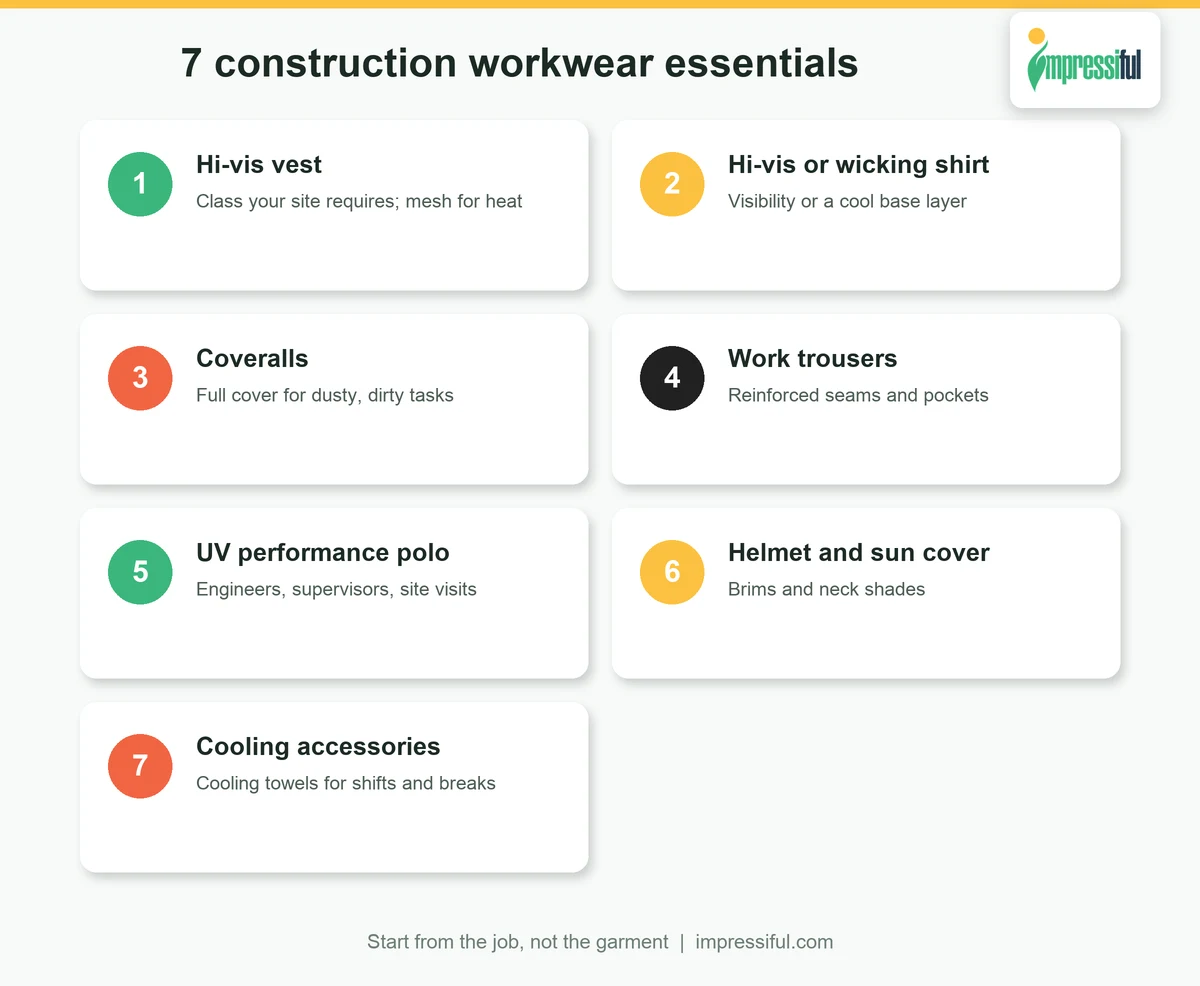
| Essential | What it does on site | What to check before you buy |
|---|---|---|
| 1. Hi-vis vest | Makes workers visible to drivers and plant operators | The class your site requires, mesh or solid fabric, tape condition |
| 2. Hi-vis or wicking work shirt | Visibility without a vest, or a cooler base layer under one | Fabric weight, sweat wicking, sleeve length for sun cover |
| 3. Coveralls | Full body cover against dust, dirt and splashes | Fabric, ventilation, pockets, and certified flame protection if needed |
| 4. Work trousers | Tough lower body cover for kneeling, climbing and tools | Reinforced seams, pockets, fit for movement |
| 5. UV performance polo | Smart, breathable wear for engineers, supervisors and site visits | Sun protection rating, moisture wicking, logo method |
| 6. Helmet and sun protection | Head protection plus shade for the neck and ears | The head protection standard your site requires, brims or neck shades |
| 7. Cooling accessories | Help workers cope with heat during shifts and breaks | Easy to clean, reusable, simple to brand |
From our own catalogue, site teams can order a high visibility safety vest with fluorescent fabric and reflective strips, a high visibility safety t-shirt, safety coveralls, a safety trouser with utility pockets, a performance polo with UPF 50+ fabric, a safety helmet, bucket hats and cooling towels. For office, kitchen and front desk roles, our custom uniforms Dubai guide covers the rest of the team.
Planning a branded order?
Share your quantities, budget and deadline. We reply with options, mockups and a bulk price, plus free design help.
Hi-vis classes explained for UAE buyers
Hi-vis clothing is rated by how much fluorescent background fabric and retroreflective tape it carries. Fluorescent fabric makes a worker stand out in daylight; reflective tape shines back in headlights at night. The two standards you will see on labels in the UAE are EN ISO 20471 (the international and European standard) and ANSI/ISEA 107 (the American standard). Both use three main classes, and a higher class means more coverage, as the Canadian Centre for Occupational Health and Safety explains.
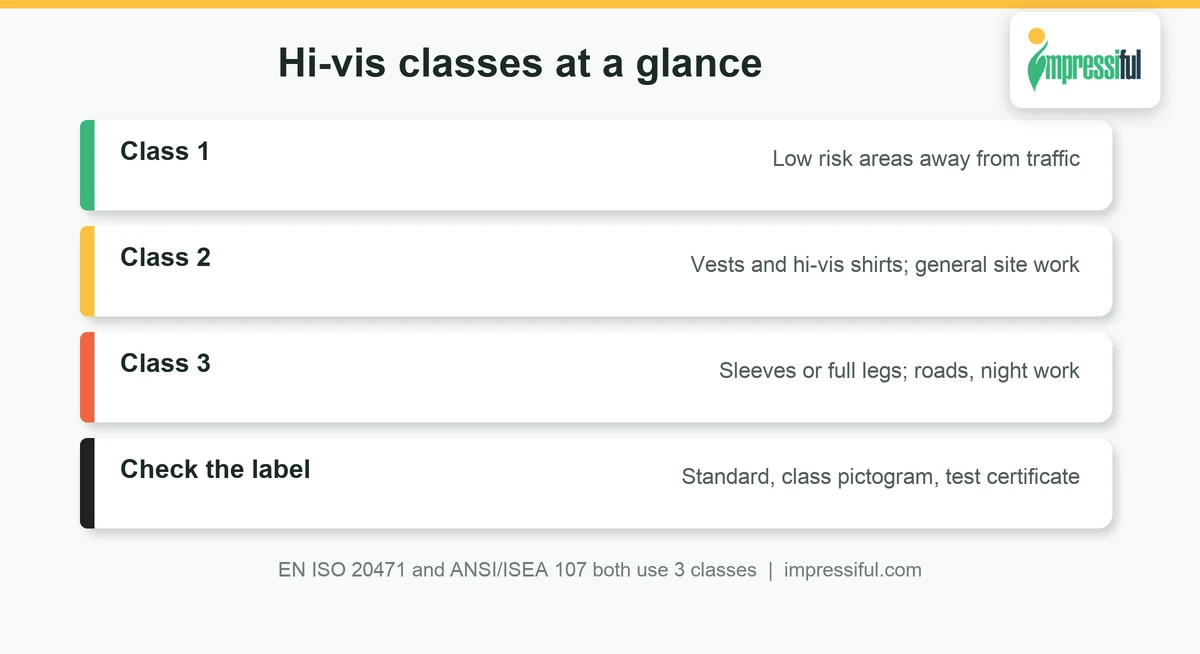
| Class | Coverage | Typical garments | Typical use |
|---|---|---|---|
| Class 1 | Lowest area of fluorescent fabric and tape | Hi-vis trousers on their own, bands, small items | Low risk areas well away from traffic |
| Class 2 | Covers the upper body | Vests, waistcoats, hi-vis t-shirts and polos | General site work, yards, warehouses, slower traffic |
| Class 3 | Highest coverage, including sleeves or full length legs | Long sleeve garments, coveralls, a certified top and trouser set | Road works, fast traffic, night work and poor visibility |
Three rules matter when you buy. First, the class is printed on the garment label with the standard, usually as a pictogram with the class number, so ask for that label and the test certificate rather than relying on a colour or a product title. Second, adding extra tape to a vest does not turn it into Class 3; coverage of the arms or legs is part of the design. Third, two garments only count as Class 3 together when the maker certifies them as a set.
These are buyer checks: our product pages describe fluorescent fabric and reflective strips, so if your site or main contractor requires a specific class, tell us and ask for the documents of the exact item before you order.
Class 2 or Class 3 on a UAE site?
Class 3 gives the most visibility, but it is not automatically the better choice. In summer heat, a lightweight mesh Class 2 vest over a breathable shirt is cooler and is often what general site work requires. Choose Class 3 where your risk assessment or client asks for it: road works, fast traffic, night shifts and low visibility.
Coveralls or two piece workwear?
Coveralls are the classic construction workwear choice because nothing rides up and nothing snags. Two piece workwear (a work shirt with trousers) is cooler and easier to swap when one part wears out. Many crews use both: coveralls for dirty or dusty tasks and two piece sets for general site work.
| Question | Coveralls | Shirt and trousers |
|---|---|---|
| Protection | Full body cover, no gap at the waist | Good cover, gap at the waist when bending |
| Heat | Warmer; look for light fabric and vents | Cooler; the shirt can be changed mid shift |
| Fit | One size must fit height and chest | Top and bottom sized separately |
| Replacement | Replace the whole garment | Replace only the worn part |
| Branding | Chest and back | Shirt chest and back, trousers usually plain |
Welding, hot work and electrical work are different. They need clothing certified for that hazard, for example to EN ISO 11612 for heat and flame or EN ISO 11611 for welding, and ordinary coveralls are not a substitute. Our catalogue lists a flame resistant coverall; if you need certified protection, ask for the fabric and garment test documents first and check them against your site rules.
Heat stress and the UAE midday break: what it means for workwear
The midday break is set by the Ministry of Human Resources and Emiratisation under its Occupational Heat Stress Prevention Policy. Work under direct sunlight and in open areas is banned daily from 12:30pm to 3pm from 15 June to 15 September. Employers must provide shaded rest areas, cooling, drinking water and first aid, and certain technical jobs that cannot be stopped are exempt if those protections are in place. The UAE Cabinet has said violators face fines of AED 5,000 for each worker, up to AED 50,000 where many workers are involved.
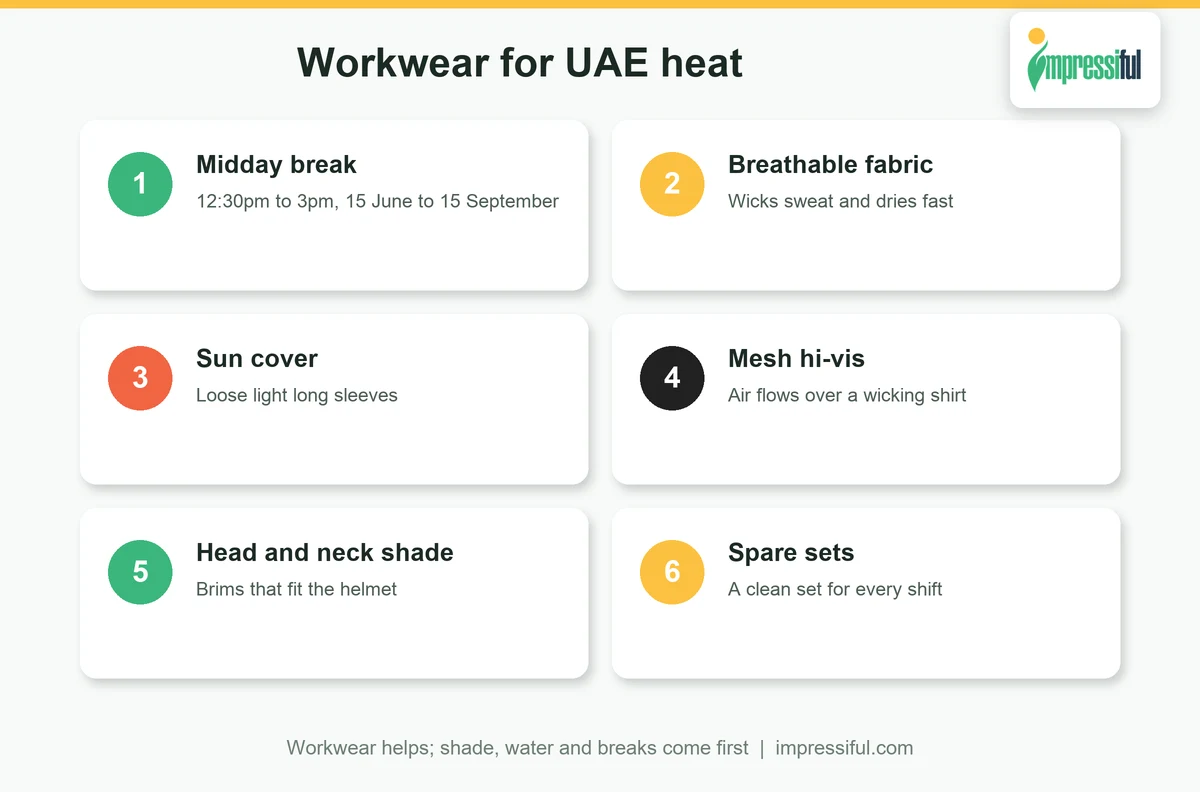
Workwear does not replace breaks, shade and water, but it can make the hours either side of the break easier:
- Breathable, sweat wicking fabric: fabric that moves sweat away and dries quickly feels lighter than heavy cotton that stays wet.
- Sun cover: a loose, light long sleeve layer with a sun protection rating can keep direct sun off the skin better than bare arms.
- Light colours where the site allows: light shades reflect more heat; hi-vis colours stay where visibility is required.
- Mesh hi-vis: a mesh vest lets air through over a wicking shirt.
- Head and neck shade: brims and neck shades that fit with the helmet your site requires.
- Enough sets: plan at least one clean set per worker per day, so nobody starts a shift in damp clothes.
- Never remove required PPE to cool down: switch to a lighter version of the same protection instead.
Best fabrics for construction workwear in UAE heat
The best fabric depends on the job, how much people sweat and whether there is heat or sparks nearby. The weave and weight matter as much as the fibre: a lighter, more open fabric breathes better than a heavy, tight one. Our guide to t-shirt GSM explains fabric weight in more detail.
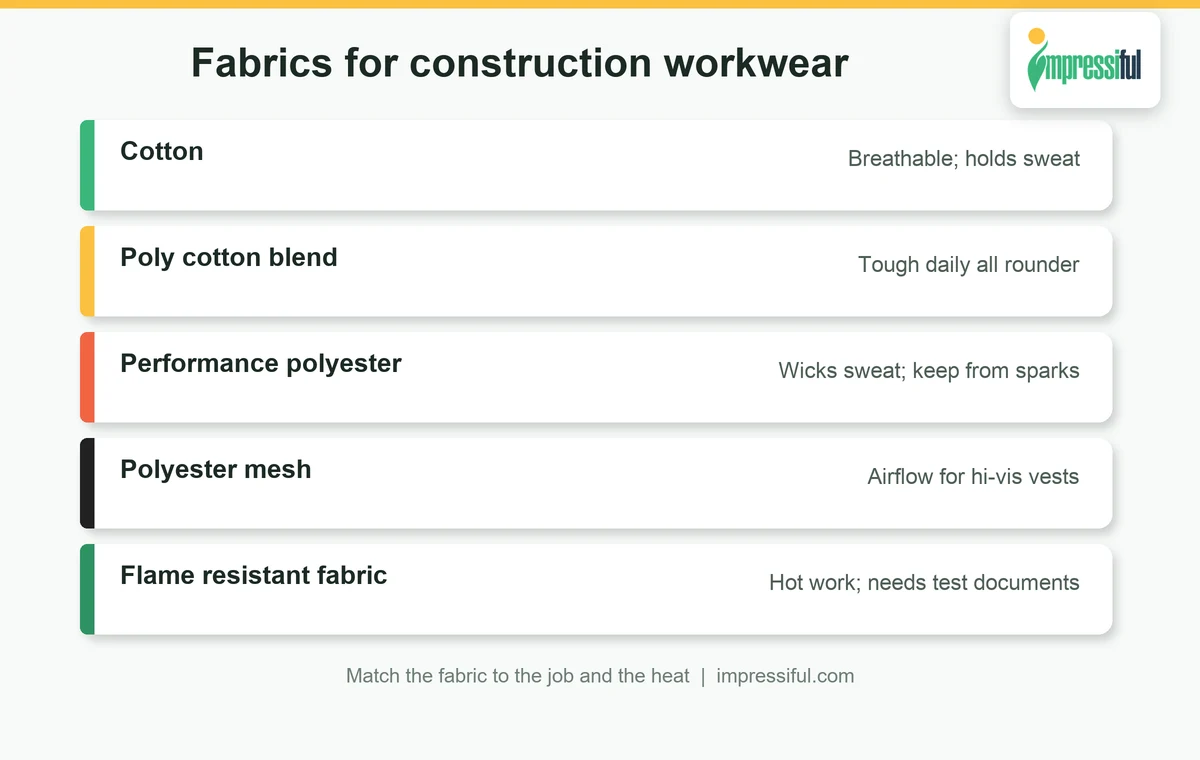
| Fabric | Strengths | Watch out for | Best for |
|---|---|---|---|
| Cotton | Soft, breathable, comfortable on skin | Holds sweat and stays wet in heavy heat | Indoor fit out, inspections, light work |
| Poly cotton blend | Tougher, keeps its shape, dries faster than cotton | Heavier weights feel warm | Coveralls, work shirts and trousers for daily use |
| Performance polyester | Wicks sweat and dries fast; can carry a sun protection rating | Can melt near sparks or flame | Outdoor crews, polos and base layers |
| Polyester mesh | Lets air through | Less durable than solid fabric | Hi-vis vests in summer |
| Flame resistant fabric | Certified to resist heat and flame | Must match the hazard and carry test documents | Welding, hot work, electrical work |
Branding construction workwear without breaking safety rules
Branded workwear helps clients and site managers tell crews apart and shows who is responsible for which area. On hi-vis garments, the logo must never cost visibility. These placement rules keep workwear safe and readable:
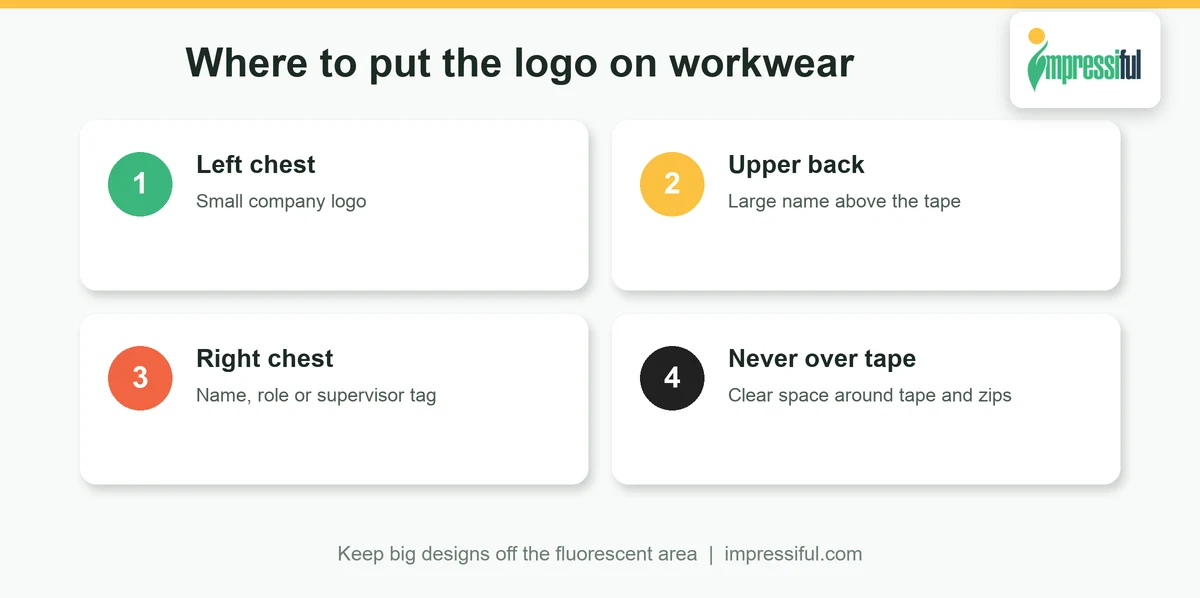
- Left chest: the standard place for a small company logo on vests, shirts, polos and coveralls.
- Upper back: the place for a large company name or crew title, above the reflective tape so it stays readable from a distance.
- Right chest: a name, role or supervisor tag, so visitors know who to ask.
- Never over reflective tape: leave clear space around tape, zips, pockets and seams.
- Keep large logos off the fluorescent area on rated garments: printing over too much fluorescent fabric can take a garment below its class, so check any large design with the maker of a certified item.
The method depends on the garment. Embroidery suits coveralls, work shirts and polos because it survives heavy washing; printing suits vests, hi-vis shirts and large back designs. Our embroidery vs printing guide compares both, our printing methods page lists what we use (DTG printing, sublimation, embroidery and UV printing, matched to each material), and our guide to custom caps covers branded headwear. Embroidery is priced by the complexity of the design, and the price shows in our design tool.
How to order construction workwear from Impressiful
- List roles and hazards: who works near traffic, who works with heat or sparks, who is outdoors all day.
- Confirm the site requirements: ask your main contractor or safety officer which hi-vis class and protection each role needs.
- Choose garments and sizes: pick from our uniforms and work apparel collection and collect sizes from the team.
- Send your logo: our design team prepares the design free of charge; you can also request a free digital mockup.
- Approve the sample: when you confirm an order, you receive a sample kit before production. It is mainly digital, with branded mockups and product details; samples requested without a confirmed order are charged.
- Check documents: for any item your site needs certified, ask for the test documents of that exact item before production.
Comparing suppliers as well? Our guide to the best uniform company in Dubai sets out the checks that matter, and our custom polo shirts guide covers the polos supervisors and engineers often wear.
Frequently asked questions
Is class 2 or 3 hi-vis better?
Neither is better for every job. Class 3 gives the most visibility because it adds sleeves or full length legs, so it suits road works, fast traffic, night shifts and poor visibility. Class 2 covers the upper body, is lighter and cooler, and is often what general site work requires. Use the class your site or risk assessment asks for.
What is the best fabric for work shirts in hot weather?
For outdoor construction and heavy sweating, a lightweight moisture wicking performance fabric works best because it dries quickly. A poly cotton blend is a tough all rounder for daily work shirts, and light cotton suits indoor or low abrasion work. Choose a looser fit, light colours where allowed and a sun protection rating for outdoor shifts, and avoid synthetics near sparks.
What are the rules for the MoHRE Midday Break?
Work under direct sunlight and in open areas is banned daily from 12:30pm to 3pm between 15 June and 15 September. Employers must provide shaded rest areas, cooling, drinking water and first aid. Some technical jobs that cannot be stopped are exempt if those protections are provided, and fines are AED 5,000 per worker, up to AED 50,000.
What do construction workers wear in the summer?
In summer, construction workers swap heavy cotton for lightweight, breathable, sweat wicking shirts, often with long sleeves for sun cover, plus light work trousers where site rules allow. They keep required PPE: mesh hi-vis vests or hi-vis shirts, helmets with brims or neck shades, and protective boots.
Where to put a logo on a vest?
Put a small logo on the left chest and a large company name or crew title on the upper back, above the reflective tape. Use the right chest for a name or role. Never print over reflective tape, leave space around zips, pockets and seams, and keep large designs off the fluorescent area of certified vests.
Get a quote for your construction workwear
Send us your roles, garments, sizes and logo, and we will recommend fabrics and branding and confirm the details in writing.
Get a free quote for your site workwear
Prefer WhatsApp? Message +971 52 656 8355. Our office is at Office C1-1F-SF3340, Ajman Free Zone C1 Building, Ajman, UAE, open Monday to Saturday, 9:30am to 7pm.